BPF
  • Home
  • BPF Blog
  • Appraisal
  • Personalism
  • About Us
    • Join as a Member
    • Donate
    • Contact Us
Picture
Appraisal Home
Current Issue
Past Issues
LETTERS TO THE EDITOR
Editorial Team
Guide for authors
supporting open access
add comment to article

Appraisal Volume 12, No.s 1 and 2, Spring and Autumn 2020​

​ISSN 2514-5584​

Book Review

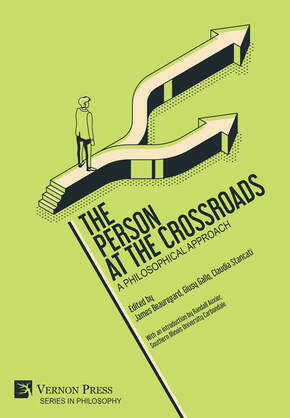
Edited by James Beauregard, Giusy Gallo, and Claudia Stancati
The Person at the Crossroads

Vernon Press, Wilmington, DE, ISBN: 978-1-62273-888-5, 312pp
Picture
Personalism is a pluralistic movement with deep historical roots. In light of the loss of any consensus around how we can identify a being called a 'person' and in the face of reigning reductionisms that claim we cannot, it also has a particular contemporary urgency. That makes it exhilarating to gather the work from the movement stalwarts and others who convene at the International Forum on Persons biannually. The latest crop, from the 2017 Conference at the University of Calabria, Italy, and is published in this volume.

Of course, the urgency is not new, but it is more pointed than at any time since the rational, systematic, and objective approach to persons, often called 'critical thinking', came to hold sway in modernity. Even in the late 19th century when Borden Parker Bowne made Boston University the centre of American personalism, the use of 'soul' to describe what made persons was not particular problematic. No such luxury is allowed today. The fifteen essays in this book approach our situation variously. Some look to the guidance provided by pre- and post-critical thinkers, others look to the misgivings of modern thinkers like Hume and Kant for clues to what they were least able to accommodate about personhood, and still others confront reductionist schemes directly and in original ways.

Long before the era of critical philosophy, St. Augustine developed the first rational conceptualization of persons in the course of defining the trinity. Matteo Scozia takes us through the theological reasoning that found in a human person's memory, intellect, and will an image of God's trinitarian life.

Critical thinkers like Hume and Kant were aware of the elusiveness of personal being to their rationalistic grasp. Spartaco Pupo explains Hume's attempt to analogize a person's being with that of a political system, while Laura J. Mueller explores the tension in Kant's ethical teachings about suicide.

Among post-critical thinkers, the contributors to this volume find useful guidance in a variety of thinkers. Husserl and Merleau-Ponty celebrated the ambiguity in our awareness of our body—in Husserl's terms, the corps sujet and the corps object. Peter Reynaert asks what this same ambiguity means for our right to determine what happens to our body. For Marc Djaballah, Merleau-Ponty's philosophical anthropology is unstable in its account of the registries of our somatic awareness. It seems to foreclose an appreciation of the ways bodily experiences are changing as we appropriate digital technologies in our active lives. Bianca Bellini uses Max Scheler's model of personhood to illumine the way others influence how we shape our lives.

More recently, Christine Korsgaard's Kantian approach to identity issues depicts a person as an activity of self-constitution, but Xiaoxi Wu faults this model for failing to solve a problem that Kantian ethicists have long wrestled with, that of conflicting obligations. Rational reflection, she argues, cannot decide between them. We need to embrace the ambiguity and admit that an existential resolution rather than an appeal to universal principles is called for. Finally, R.T. Allen invites us to look beyond the usual themes in Michael Polanyi's personalism. Personalists find in his epistemology and critiques of scientific reductionism a firm basis for post-critical thought, but they pay little attention to his contributions to economic thought, which, Allen provocatively reminds us, advocate free market and free trade as the default economic policies which need to be modified for higher purposes.

Reductionisms of various kinds have challenged our common sense appreciation of what it means to be a person, particularly our sense of being morally responsible, free agents. Epistemology, which has dominated the concerns of philosophers since Descartes, has sought ways of guaranteeing the veracity of our grasp of reality by filtering out what is distinctively personal in our perceptions. Carlo Vinti examines the neo-empirical approaches of Carnap and Popper, the more nuanced views of Bachelard, and the gold-standard for personalistic epistemology, Polanyi. He displays the range of contending positions on the relationship of epistemology and person. Grzegorz Holub considers one model for relating persons to their biological antecedents: the person as an emergent reality. This is a non-reductionist model but, in the end, a naturalistic one. By that he means it cannot account for the meaning and mystery of personhood. The elusive meaningfulness of persons—elusive to reductionists, that is also the topic of James Beauregard, himself a neuro-psychologist. He explores the ways technology fosters forgetfulness, drawing from Spanish personalist, Juan Manuel Burgos, Erazim Kohák, and Paul Ricoeur, as well as virtue ethicists Alasdair MacIntyre and Shannon Vallor. These figures highlight the sense of the narrative unity we experience as individuals and communities, and recall our sense of the goals and purposes that make our lives irreducible.

One of the other debilitating legacies of scientific modernism is a regard for persons as isolated individuals whose relational lives are incidental to who they are. Endre J. Nagy explores Polanyi's 'indwelling' as one line of rehabilitation. We dwell in symphonies, theories, and even God, all transcendental meanings. He finds in Calvin O. Schrag's 'transversality' another blind spot that makes the modern model is deficient. Yong Lu discusses both the affinities and differences of Confucian and personalistic thought. Elizabeth M. Yang considers the 19th century educator Horace Bushnell's views on the 'organic' connection between children and their parents, a view that problematized the then current views of child-rearing and education. Carol J. Moeller finds in the practice of moral attention a way to escape the limitations of one's entrenched perspectives, particularly regarding race. She encourages us to see the practice as the cultivation of different perspectives that would then support wider and less parochial attitudes.
​
This is a rich and rewarding collection of essays and a delightful sampling of work being done on the many fronts of our movement's recovery of the personal. 
Richard Prust

Comments on this review

To add a comment to this review, use the 'Add Comment to Article' item on the menu to the left.
​Any comments will be posted here.
Proudly powered by Weebly
  • Home
  • BPF Blog
  • Appraisal
  • Personalism
  • About Us
    • Join as a Member
    • Donate
    • Contact Us